

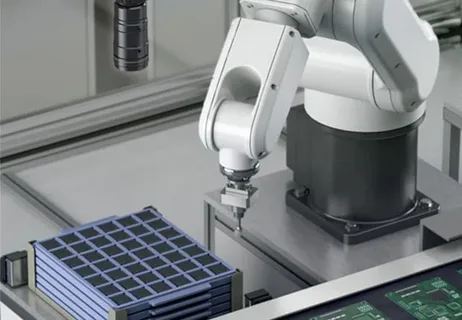
Automation is no longer just about speed—it’s about intelligence. Today’s industrial leaders are embracing vision guided robotics, a powerful blend of robotics and machine vision that gives machines the ability to perceive, interpret, and respond to their surroundings. This technology enables flexible, dynamic automation in environments where traditional robots would fall short. From precision assembly to quality control and warehouse logistics, vision guided robotics is reshaping how industries operate in real time.
One of the standout providers in this space is MRDVS, whose intelligent systems are designed to deliver precise, efficient results across a range of industries. To learn more about how their technology is enhancing modern automation, visit https://mrdvs.com/vision-guided-robotics/.
In this article, we’ll explain how vision guided robotics works, explore its key benefits, outline real-world applications, and examine what makes this technology the future of smart manufacturing and logistics.
What Is Vision Guided Robotics?
Vision guided robotics (VGR) refers to robotic systems that use integrated cameras and image-processing software to analyze visual input. Unlike conventional robots that operate based on fixed paths and coordinates, vision-guided systems react to real-world data in real time.
These robots are designed to:
- Detect objects based on shape, size, and orientation
- Make decisions based on what they see
- Adjust their movements to accommodate variability
- Perform high-precision tasks without the need for manual alignment
At the heart of a VGR system is the camera (either 2D or 3D), which captures an image of the work environment. This image is processed to identify the object’s position and orientation, allowing the robot to interact with it accurately—even if it’s randomly placed or moving.
How Does Vision Guided Robotics Work?
The process begins with a camera capturing an image or video stream of the workspace. This visual data is then analyzed using advanced image processing software, often powered by machine learning or AI. The software identifies key features—edges, contours, shapes—and calculates the object’s exact position and orientation.
Once the visual data is interpreted, the robot’s control system calculates the movement path and performs the required action, such as:
- Picking up the object
- Placing it in a bin or container
- Assembling it with other parts
- Inspecting it for defects
This entire process occurs in milliseconds, enabling high-speed decision-making and execution on the production floor.
Benefits of Vision Guided Robotics
Vision guided robotics offers a wide array of advantages for businesses looking to modernize their operations:
- Increased Flexibility
Traditional robots need perfectly positioned objects to function correctly. Vision guidance eliminates this need by allowing robots to locate and handle items in varied positions or orientations. - Enhanced Precision
VGR systems can identify the smallest variations or defects, making them ideal for tasks that demand accuracy, such as quality inspection or intricate part placement. - Reduced Downtime
Because vision systems adapt in real time, there’s less need to reprogram robots for different product types, reducing changeover time and downtime. - Cost Savings
By minimizing the need for manual labor and improving quality assurance, businesses can significantly cut operational costs. - Seamless Integration
Modern VGR systems integrate easily with existing machinery, ERP software, and production lines—without requiring full overhauls.
Eye-in-Hand vs. Eye-to-Hand Systems
There are two primary ways to configure vision guided robotics systems:
Eye-in-Hand
In this setup, the camera is mounted directly on the robot’s arm. As the arm moves, the camera captures different angles of the object, enabling highly dynamic and precise operations. This method is ideal for:
- Intricate assembly tasks
- Objects with irregular placement
- Detailed inspection routines
Eye-to-Hand
Here, the camera is fixed above or beside the workspace, providing a stable view of the working area. The robot uses this perspective to navigate and perform actions based on a top-down visual field. This method is best suited for:
- High-speed sorting
- Conveyor-based operations
- Simple pick-and-place tasks
| Configuration | Camera Position | Best For | Pros |
| Eye-in-Hand | Mounted on robot | Precise, variable object tasks | More flexibility, mobility |
| Eye-to-Hand | Fixed in place | Fast, repetitive actions | Consistent field of view |
Real-World Applications of Vision Guided Robotics
Vision guided robotics is already being used across multiple sectors with transformative results:
1. Manufacturing & Assembly
Robots equipped with vision systems are now used for assembling complex parts, inserting components, and inspecting product quality. Automotive and electronics manufacturers rely on them for:
- Bolt alignment
- Connector placement
- PCB inspection
2. Quality Control
With high-resolution vision, robots can detect micro-defects, scratches, incorrect labeling, or dimension mismatches. They ensure product quality without slowing down production.
3. Logistics & Warehousing
In fulfillment centers, VGR robots are used for sorting packages, picking products, and organizing inventory. They can identify barcodes, QR codes, or object shapes, making them essential for:
- E-commerce order picking
- Palletizing mixed loads
- Real-time package tracking
4. Food and Beverage
Vision-guided robots in the food industry handle tasks like:
- Sorting produce by size or color
- Ensuring packaging consistency
- Removing defective items from the line
5. Pharmaceuticals and Medical Devices
Accuracy is vital in the pharma sector. VGR systems are used for:
- Pill counting and placement
- Vial and label inspection
- Automated packaging
Enabling Technologies Behind Vision Guided Robotics
Several technologies work together to power modern vision guided robots:
- 2D/3D Cameras: Capture surface data and depth information
- Image Processing Software: Analyzes visual inputs in real time
- AI and Machine Learning: Improves recognition of variable items
- Robotic Arms & Grippers: Perform actions based on processed data
- Edge Computing: Processes visual data locally for faster decision-making
When Should You Invest in Vision Guided Robotics?
If your operation includes variability, precision, or high-speed requirements, vision guided robotics could be the right solution. Key indicators that it’s time to invest:
- Manual inspections or pick-and-place are slowing production
- Error rates from human handling are too high
- You produce or process multiple product types or SKUs
- You want to future-proof your automation
Challenges and Considerations
While vision guided robotics offers major benefits, there are some challenges to address:
- Lighting Conditions: Inconsistent lighting can affect image clarity.
- High Initial Cost: Although ROI is strong, the setup may require upfront investment.
- Complex Integration: Needs to be aligned with your current software and robotics systems.
- Environment Variability: Reflective surfaces, dust, or vibration may reduce effectiveness if not properly accounted for.
The Future of Vision Guided Robotics
As AI, 3D vision, and edge computing evolve, vision guided robotics will only become smarter and more capable. Future trends include:
- Self-learning robots that improve with every cycle
- 5G-enabled real-time processing for global factory networks
- Human-robot collaboration in shared workspaces
- Cloud-based analytics for system optimization and predictive maintenance
These developments will help vision guided robotics become a standard part of any smart factory or warehouse.
Conclusion
Vision guided robotics isn’t just an innovation—it’s a revolution in smart automation. By combining robotic efficiency with visual intelligence, VGR systems can operate with remarkable precision, adaptability, and autonomy. Whether you’re in manufacturing, logistics, pharmaceuticals, or food processing, these systems offer a clear path to faster, safer, and more cost-effective operations.
If your business demands flexibility, quality, and scale, vision guided robotics could be the smartest investment you make.
